
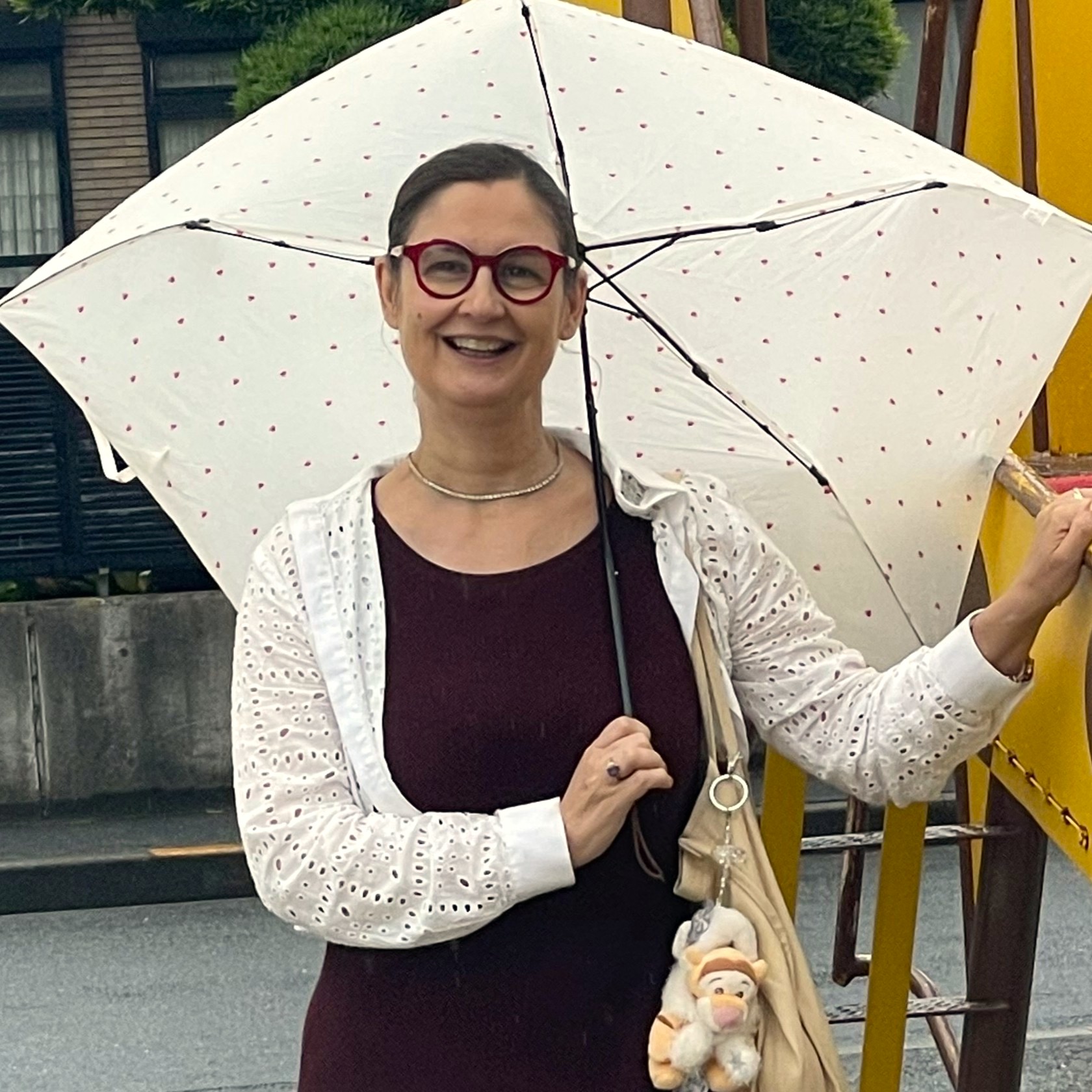
When I was at McKinsey Japan, we had a global training for communication specialists. We all had to “perform” at the closing party. I sang 氷雨 with a twist. I alternated each Japanese line that I sang with an English translation!
My favorite was
🎶傘がないわけじゃないけれど、帰りたくない 🎶
(It’s not that I don’t have an umbrella, I just don’t want to go home…)
It went down really well! 🤣
Not just because it was pretty entertaining, but also because I’d introduced to my global colleagues a communication-related backstory from Japan.
I told them about a framework that we used at the McKinsey Japan office for logical thinking and problem solving. It was also great for communication structure.
(I wondered if it’s okay to share with you… but when I Googled it, it was easy to find, so it’s no big secret 😎)
It goes like this:
空 (Sora) Sky – This is the situation. It’s the facts or data that everyone in the conversation can agree on.
雨 (Ame) Rain – This is the problem. It’s the analysis or forecast that needs to be addressed.
傘 (Kasa) Umbrella – This is the solution. It’s the decision or action that’s a logical conclusion based on the situation and problem you’ve explained.
For example, I could say this:
(空 Sky) Speaking clearly and confidently in global business meetings and presentations is essential if you want your ideas to be heard and to create a positive impression.
(雨 Rain) But if you were brought up in Japan, you probably have a strong sense of humility and harmony, so you’re not used to speaking up. It’s even more difficult if you have to do it in English and that’s not your first language. And, if you’re a woman, you may face the extra hurdle of how to communicate effectively in a male-dominated environment. As a result, you either stay silent or you struggle through your words and your message doesn’t land.
(傘 Umbrella) The fix isn’t to keep “gamaning” through it or even to work harder at what you’re already doing. You need a different 3-part approach to address this complexity:
- Contextual Mindset: thinking that takes into consideration cultural sensitivity, linguistic hurdles, and gender implications
- Intentional Skills: content, body language, and vocal techniques specific to the audience and situation in front of you
- Guided Practice: they say “practice makes perfect,” but if you keep practicing ineffective techniques, you become perfectly ineffective; instead be sure to practice with expert guidance
That’s what the new CLEAR MESSAGE, CONFIDENT VOICE program is all about.
See how it works?
(And yes, I snuck in a mention of my new program there 😎)
This “Sora-ame-kasa” structure is especially useful when your audience might at first be resistant to the solution you’re bringing and a “conclusion first” approach would probably fall on deaf ears. It also works when the audience might not have much background on the solution you’re introducing.
I’d love to know if you’re able to use this in your communication this week!

If you’re interested in the program…
CLEAR MESSAGE, CONFIDENT VOICE is a time-efficient, high-impact 6-week online group program for women leaders in Japan to speak up, be heard, and create more impact in global business.