
I had sooooooo much fun over the weekend creating two AI assistants to help me handle my professional and personal life in a “less effort, more impact” way.
I started with Peony, my AI Executive Assistant (of course, not replacing the fabulous human Yumi from Team Sasuga!) and Mrs Jolly, my AI Housekeeper.
Mrs Jolly encouraged me through tidying and decluttering some areas that had got a bit out of hand 🤪 One was the kitchen drawer where we keep pans, containers, and such. She questioned why I had two sieves. Hadn’t even thought of that. Now we have more space!
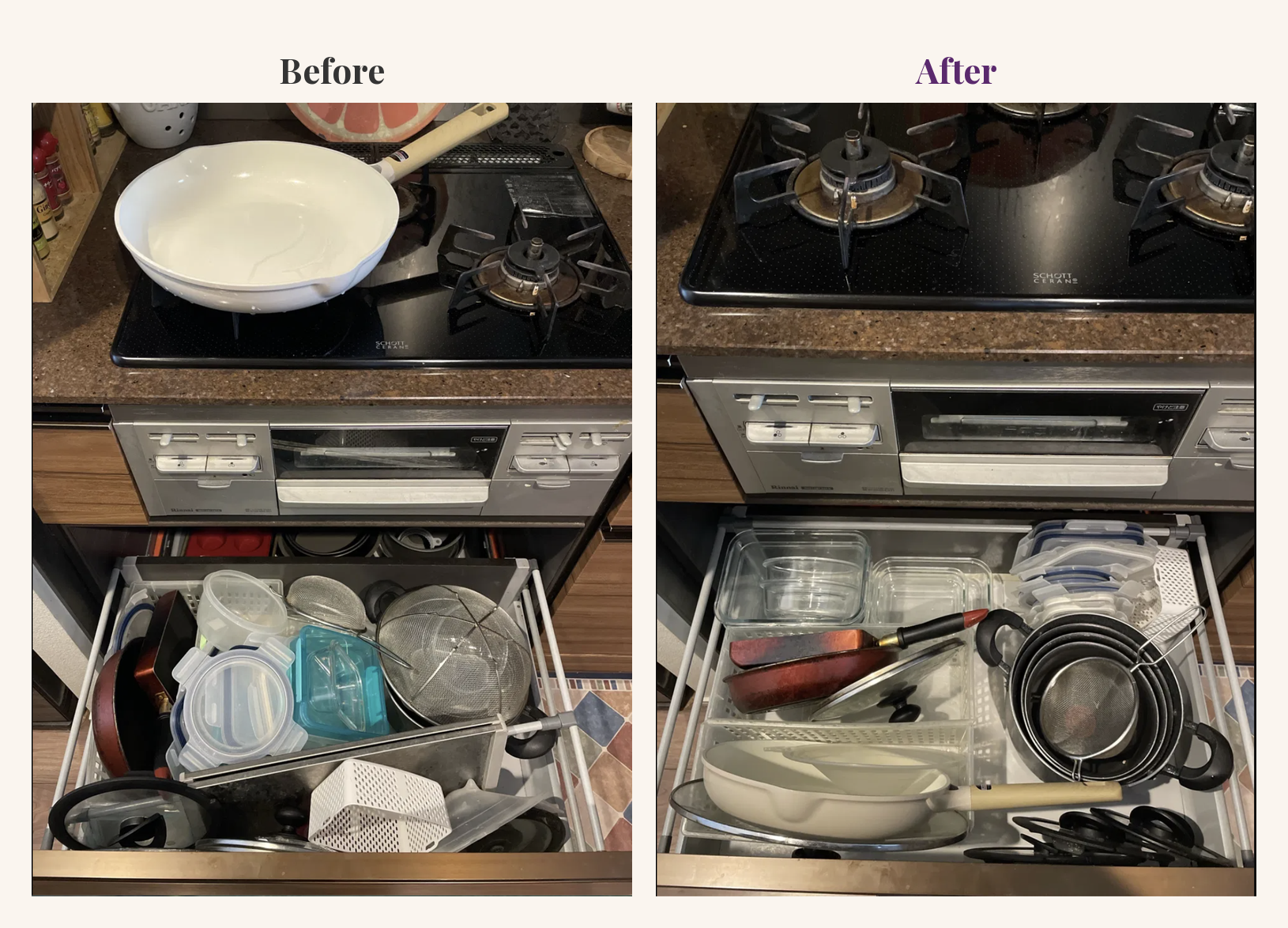
Before: even the new frying pan had nowhere to go. After: Mrs Jolly found it a home.
I know many of my clients are using AI too, for emails, proposals, and more. For many, it’s lifted a real burden: writing in your second language.
But when you walk into the meeting room and every eye turns to you, AI can’t speak for you 😅
Speaking clearly and communicating confidently in the moment is still a human skill. And how you do it makes a difference to your work quality, efficiency, reputation, and how you feel.
So today I’m sharing six human tips for your next meeting, presentation, or Q&A.
1. Stop thinking about yourself
A pounding heart, a dry throat, and a blank mind are your brain’s survival wiring. When all eyes are on you, your body sees that as a threat. Shift your focus to the people in the room: What do they need? How can you help them? Those questions move your brain from threat mode to thinking mode.
2. Match your structure to your audience
Under pressure, it’s easy to ramble, especially if you’re speaking in your second language. A simple three-part structure helps others follow and helps you remember. With a receptive or action-oriented audience, lead with your conclusion, then give three supporting points. With a resistant audience, or one new to the topic, build up to it: situation, problem, solution (you may remember the “Sky, Rain, Umbrella” Framework I talked about last time?).
3. Let your body convince your brain
People read body language constantly, often without realizing it. Sit up straight, match your facial expression to your message, and keep your palms open (no clutching a pen, the furniture, or yourself). Showing confidence with your body sends a signal back to your own brain, and you start to feel it.
4. Take time to inhale
Speaking is exhalation, so nervous speakers talk fast and forget to breathe in. That feeds the nerves and makes you sound less sure. Slow down and pause. You’ll make a stronger impression, and you’ll have time to find the right words. Naturally fast talkers can simply add more pauses, giving you a breath and giving your audience a moment to absorb your message.
5. Don’t rush to offer a followup
When a question catches you off guard, dodging it damages trust. Own it: “I don’t have the answer to that right now.” (With Japanese executives or clients, you might add “I’m sorry” first for politeness.) Then watch the reaction and offer to follow up only if it’s needed. You’re in the room because you’ve already proven that you have the relevant expertise. Nobody has every answer.
6. Act before you feel ready
Confidence comes from competence, and competence comes from practice. When I joined McKinsey Japan, I hesitated to speak up, so I pushed myself to say something in a small meeting. Nothing bad happened, and my comfort zone grew. Ten years later, my boss handed me the mic at an all-company town hall without warning, and I spoke confidently. Confidence doesn’t suddenly appear. You build it. One small step, like asking a question in your next meeting, is enough to start.
I’ve worked on all six of these tips repeatedly throughout my career, and that’s why I can speak clearly and confidently in so many situations today. Even when I feel nervous on the inside, I know how to show confidence on the outside, so my expertise shines through.
Which of the six is hardest for you right now?
📸 Photo credit: SusHi Tech 2026 (I was speaking on a panel in Japanese with AI automatic translation into English 🤣)
Frequently Asked Questions
Can AI help me speak confidently in meetings?
AI can help you prepare, for example by drafting emails and proposals or by helping you write in your second language. But it can’t speak for you in the room. Speaking clearly and communicating confidently in the moment is still a human skill, and it affects your work quality, efficiency, reputation, and how you feel.
Why do I get nervous when everyone is looking at me, and how can I calm down?
A pounding heart, a dry throat, and a blank mind are your brain’s survival wiring. When all eyes are on you, your body sees that as a threat. To calm down, shift your focus from yourself to the people in the room by asking what they need and how you can help them. Those questions move your brain from threat mode to thinking mode.
How should I structure what I say in a meeting or presentation?
A simple three-part structure helps your audience follow and helps you remember what to say, which is especially useful if you are speaking in your second language and tend to ramble under pressure. With a receptive or action-oriented audience, lead with your conclusion and then give three supporting points. With a resistant audience, or one new to the topic, build up to your conclusion with situation, problem, solution.
What body language makes you look and feel confident?
Sit up straight, match your facial expression to your message, and keep your palms open rather than clutching a pen, the furniture, or yourself. People read body language constantly, often without realizing it. Confident body language also sends a signal back to your own brain, so you start to feel more confident too.
How can I stop speaking too fast when I’m nervous?
Take time to inhale. Speaking is exhalation, so nervous speakers tend to talk fast and forget to breathe in, which feeds the nerves and makes them sound less sure. Slowing down and pausing makes a stronger impression and gives you time to find the right words. If you are a naturally fast talker, simply add more pauses, which give you a breath and give your audience a moment to absorb your message.
What should I say when I’m asked a question I can’t answer?
Own it rather than dodging, because dodging damages trust. You can say, “I don’t have the answer to that right now,” then watch the reaction and offer to follow up only if it’s needed. With Japanese executives or clients, you might add “I’m sorry” first for politeness. Nobody has every answer, and you are in the room because you have already proven your expertise.
How can I build confidence in speaking up if I don’t feel ready?
Act before you feel ready. Confidence comes from competence, and competence comes from practice, so one small step, like asking a question in your next meeting, is enough to start. Helen did this early in her time at McKinsey Japan by speaking up in a small meeting, and ten years later she spoke confidently when she was unexpectedly handed the mic at an all-company town hall. With practice, you can learn to look and sound confident on the outside even while you feel nervous on the inside.
Can coaching help with speaking confidently in meetings, presentations, and Q&A?
Yes. Working with a coach who has communication skills expertise (and cultural sensitivity) can help business professionals speak more clearly and confidently by addressing mindset, introducing techniques for content, body language, and voice, and giving feedback as they practice real meeting, presentation, and Q&A scenarios.

If you’re interested in the program…
CLEAR MESSAGE, CONFIDENT VOICE is a time-efficient, high-impact 6-week online group program for women leaders in Japan to speak up, be heard, and create more impact in global business.