

A mindset shift from my recent podcast chat
Did you know July 15 is National Give Something Away Day? It just happened that on that day, I was interviewed on a livestream of the Matcha with Jason Podcast, in collaboration with the British Chamber of Commerce in Japan.
So we built the whole conversation around things we need to give away—old habits, old stories, old limitations—to lead and communicate better.
I want to share five ideas from that chat that stuck with me.
1. “I can’t” usually means “I won’t”
Years ago, I heard this reframe and it gave me a big push to step out of my comfort zone more. When we say “I can’t,” we almost always mean “I won’t.” There are exceptions, of course—things that are genuinely physically impossible—but most of the limits we put on our speaking, our leadership, our confidence, are choices we’re making, not facts about us. The moment I recognized that, I realized I had a choice. And having a choice means having ownership, instead of feeling like things are just happening to you.
2. Confidence comes from competence, and competence comes from practice
I work with clients who assume confidence is something you either have or don’t. It isn’t. You can look and sound confident on the outside before you feel it on the inside. And here’s the beautiful part: once you start showing up that way, you get a more positive response from your audience, and that response is what actually builds real, internal confidence. It’s a virtuous cycle, and you can start it any time.
3. So this is what “punchy” communication means
I’m a karate world champion, and one thing that martial art taught me applies directly to the boardroom: a tense, over-forced punch lands weaker than a relaxed, fast one. It’s the same with communication. The more you can minimize unnecessary physical effort (hours worked), mental effort (overthinking), and emotional effort (worrying what others think), the more impact you actually have. Less isn’t lazy. It’s strategic.
4. Give someone explicit permission to challenge the room
Traditional Japanese and British culture values harmony. We don’t like to rock the boat. So I encourage teams to assign a “challenger” role in meetings, someone whose job is to ask “wait, have we really thought this through?” I’ve seen it work again and again: people who’d never volunteer a contrary opinion on their own will do it more willingly once it’s officially their role. Permission changes everything.
5. Perfect English isn’t the goal—connection is
Many of my Japanese clients want to speak perfect English, and it becomes its own trap. They get so focused on saying the right thing, or remembering their script word for word, that they stop connecting with the person in front of them. But people aren’t won over by perfect grammar or sophisticated vocabulary. They’re won over by feeling like you’re genuinely interested in them. It’s all about the audience, not about being flawless.
A moment to reflect
Which of these five hits closest to home for you right now? Is there a place where you’re saying “I can’t” when the truth is “I won’t”? And what would it look like to give that story away?
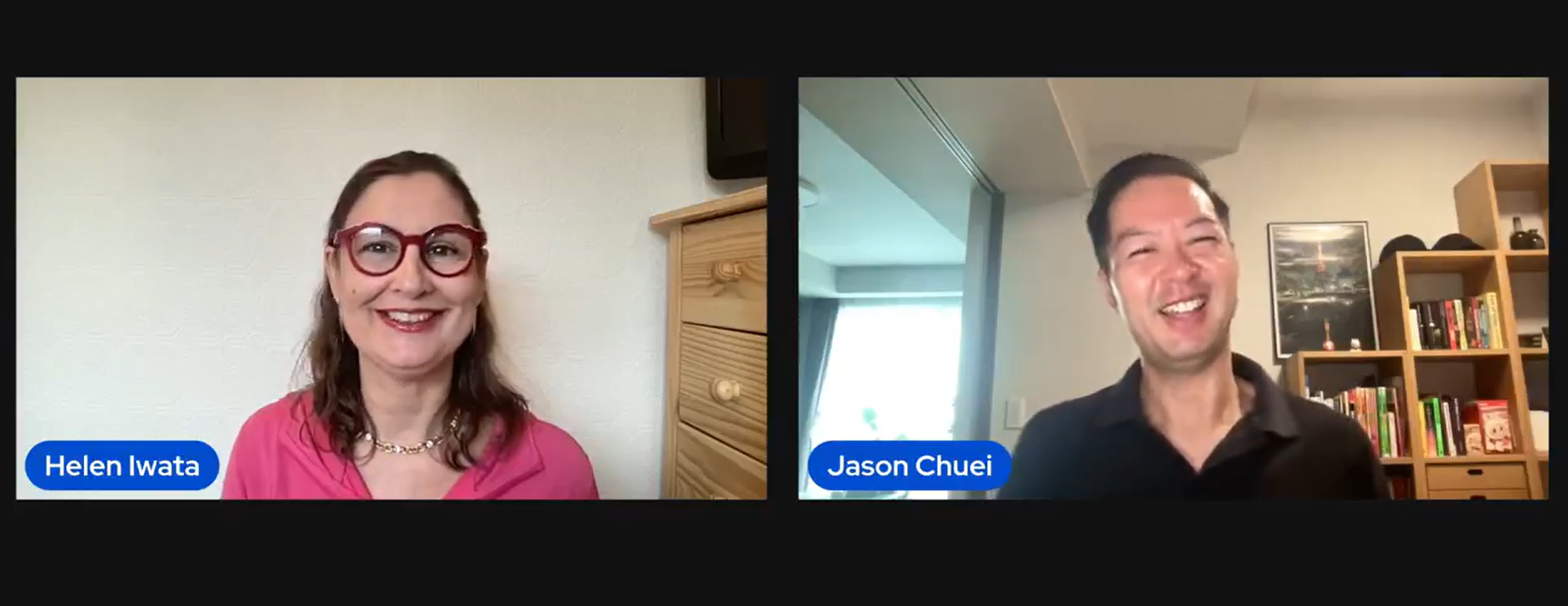
If you want the full conversation, including the parts on burnout, women’s leadership, and a giveaway of my book, you can watch it here on LinkedIn (36 mins). I’d love it if you’d drop a comment while you’re there!
About Jason Chuei
Jason Chuei, who interviewed Helen, is the Managing Partner for APAC for Bentley Lewis—an award-winning global boutique executive search and talent advisory firm. They help companies discover exceptional talent, and believe great hiring still comes down to judgment, trust
PHOTO CREDIT: Thanks to the British Chamber of Commerce in Japan
Frequently Asked Questions
What does it mean when people say “I can’t” actually means “I won’t”?
Most limits people put on speaking up, leading, or communicating confidently are choices rather than facts. Genuine physical impossibilities are the exception, but for most everyday hesitations, “I can’t” is really “I won’t” in disguise. Recognizing that shift matters because it turns a limitation into a choice, and a choice comes with ownership instead of a feeling that things are just happening to you.
Which comes first, confidence or competence?
Usually, competence comes first, and confidence follows through practice. It’s possible to use techniques to look and sound confident on the outside before actually feeling it on the inside, and showing up that way tends to generate a more positive response from other people. That creates a virtuous cycle that helps to build real, internal confidence over time.
How can you make your communication “punchy”?
You can make your communication punchy by minimizing unnecessary effort and being focused rather than adding more force or content. In martial arts, a relaxed, fast punch lands harder than a tense, over-forced one, and the same principle applies to communication: cutting unnecessary physical, mental, and emotional effort tends to increase impact rather than reduce it.
Why would a team assign someone to deliberately challenge ideas in meetings?
Assigning an explicit “challenger” role gives people permission to question decisions. This can be especially useful in cultures where harmony is highly valued, such as traditional Japanese and British workplace culture. People who would never volunteer a contrary opinion on their own often do so more willingly once it’s officially part of their assigned role because the social risk of speaking up is removed.
Is speaking perfect English necessary to communicate effectively in business?
No—connection matters more than perfect grammar or vocabulary. Many non-native English speakers focus so heavily on saying the right thing that they stop genuinely connecting with the person in front of them. People respond to feeling like someone is genuinely interested in them, not to flawless language.
Can coaching help with letting go of habits like perfectionism or over-scripting in business English?
Yes. Working with a coach who has communication skills expertise (and cultural sensitivity) can help professionals shift focus away from getting every word right and toward genuinely connecting with their audience, through feedback on mindset, content, delivery, and real practice with meeting or presentation scenarios.